


Description
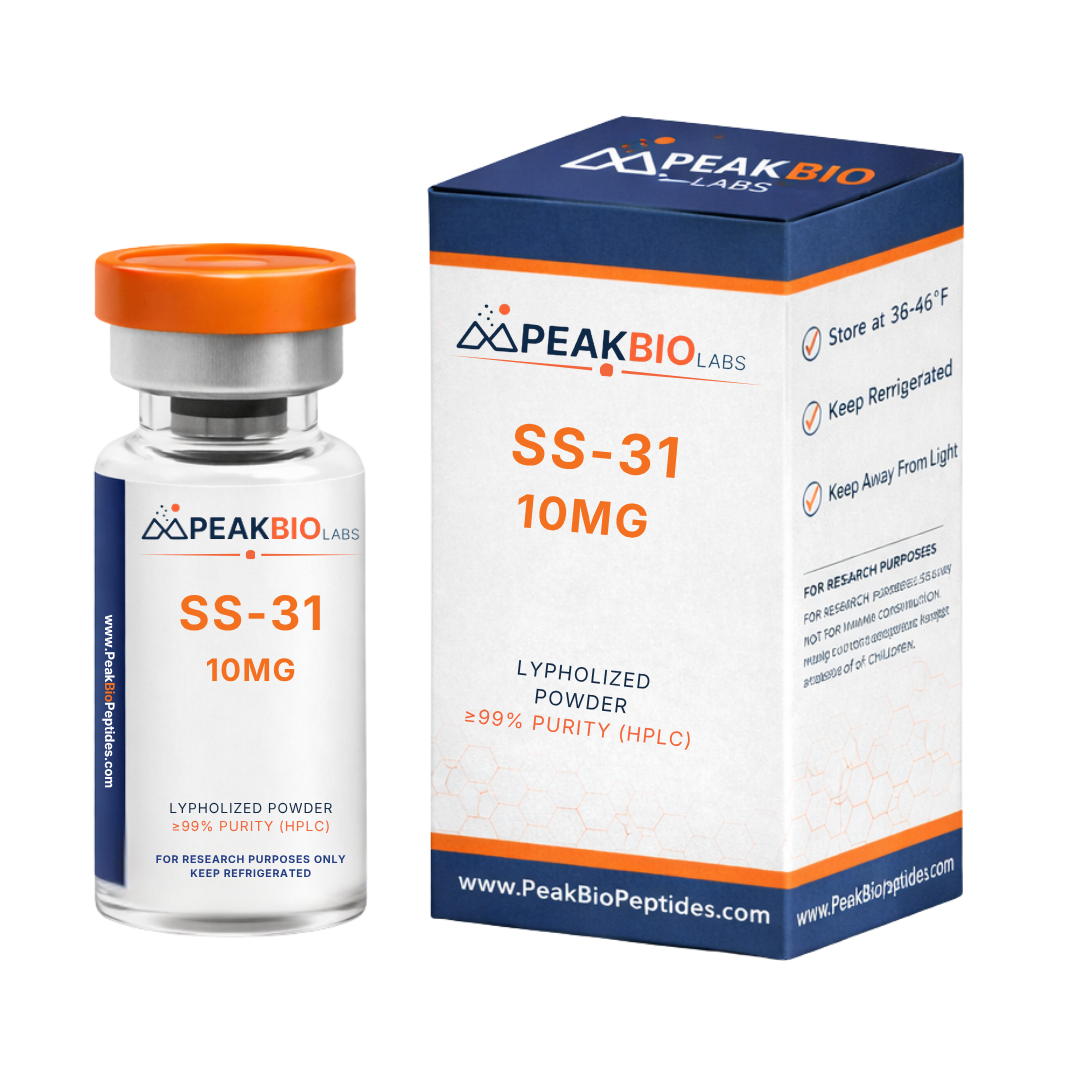
SS-31, also known as Elamipretide, is a synthetic tetrapeptide designed to selectively target mitochondrial membranes, particularly through interactions with cardiolipin, a phospholipid critical for mitochondrial structure and function.
In preclinical and experimental research settings, SS-31 has been studied for its role in mitochondrial bioenergetics, oxidative phosphorylation, and cellular energy regulation. Its ability to localize within mitochondria makes it a valuable compound for investigating mitochondrial stability, reactive oxygen species (ROS) dynamics, and energy production pathways.
This peptide is commonly utilized in in vitro and laboratory-based research models focused on mitochondrial biology, metabolic signaling, and peptide-mediated cellular processes.
Key Features:
Chemical Name: SS-31 / Elamipretide
Molecular Formula: C₃₂H₄₉N₉O₅
CAS Number: 736992-21-5
Amino Acid Sequence: D-Arg-Dmt-Lys-Phe-NH₂
(Dmt = 2’,6’-dimethyltyrosine)
Physical Form: Lyophilized powder
Compound Class: Synthetic peptide / mitochondrial-targeted peptide
Purity: ≥98% (HPLC)
Storage Conditions: Store at 36–46°F (2–8°C) in a dry, light-protected environment.
Common Research Pairings:
SS-31 is sometimes studied alongside other compounds in mitochondrial and metabolic research, including:
- MOTS-c – investigated in mitochondrial signaling and energy regulation studies
- NAD⁺ – studied in redox balance and cellular energy pathways
- Glutathione – explored in oxidative stress and mitochondrial protection models
- 5-Amino-1MQ – examined in metabolic and enzymatic pathway research
These combinations are referenced strictly within controlled research environments to evaluate complementary biochemical mechanisms.
Research References:
- Szeto, H. H. (2014). First-in-class cardiolipin-protective compound SS-31 and mitochondrial function. Journal of Bioenergetics and Biomembranes.
- Birk, A. V. et al. (2013). SS-31 and its role in mitochondrial bioenergetics and membrane stabilization. Journal of Molecular and Cellular Cardiology.
- Zhao, K. et al. (2004). A mitochondrial-targeted peptide improves cellular energy and reduces oxidative stress in experimental models. Journal of Biological Chemistry.
(References provided for informational and research context only.)
Important Notice:
This product is intended for research use only. It is not for human or veterinary use. It is not intended to diagnose, treat, cure, or prevent any disease. Use is restricted to qualified professionals in controlled laboratory environments.