


Description
Product Description:
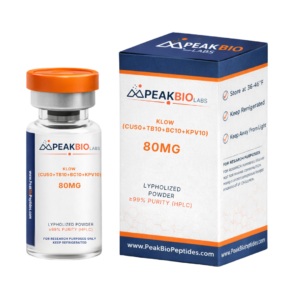
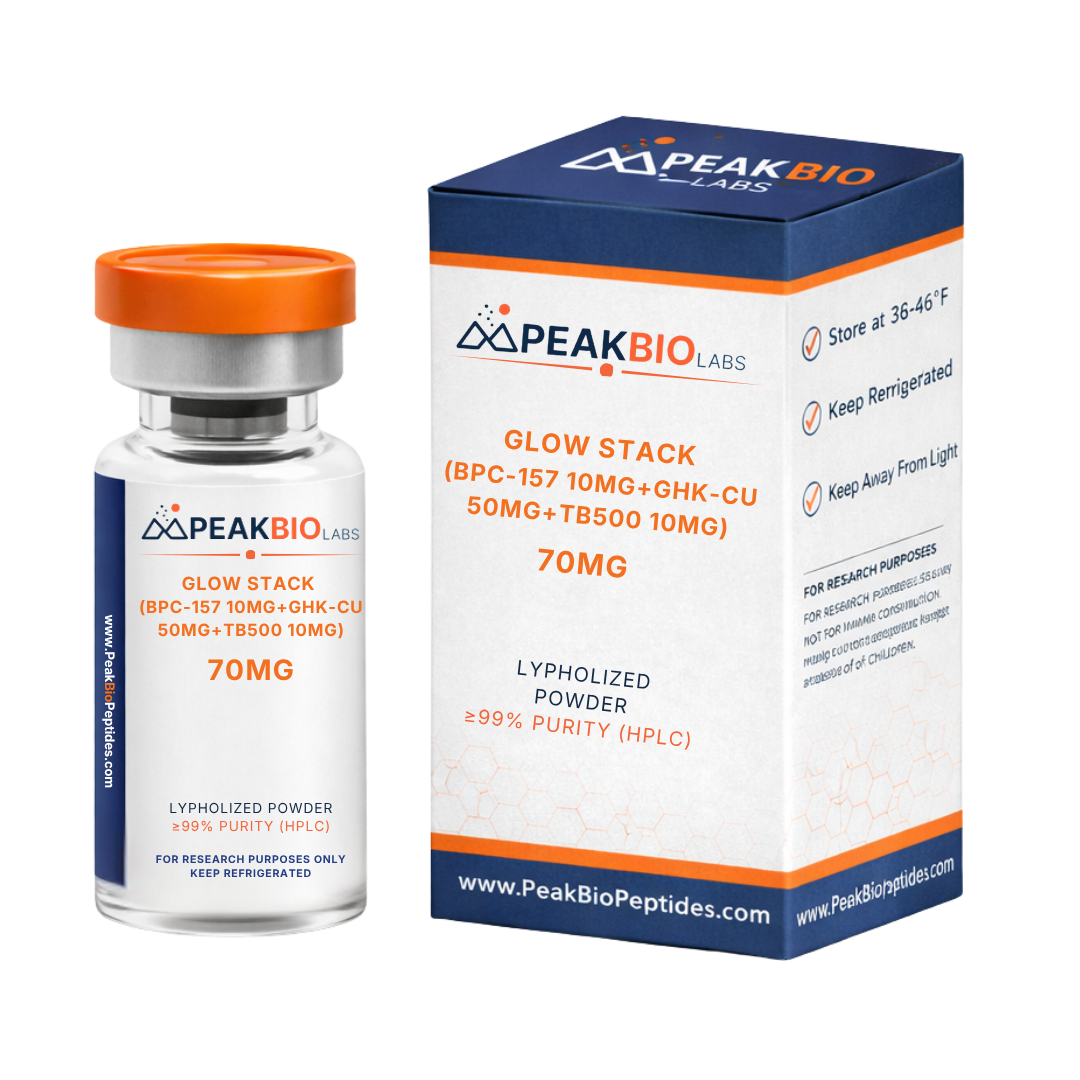
Glow Blend is a multi-component peptide formulation combining GHK-Cu (50mg), BPC-157 (10mg), and TB-500 (10mg), each of which has been individually studied in preclinical research for its interaction with cellular signaling pathways, extracellular matrix dynamics, and peptide-regulated biological processes.
GHK-Cu, a copper-binding tripeptide, has been investigated for its role in gene expression and protein regulation pathways. BPC-157, a gastric-derived peptide, has been studied for its involvement in angiogenic and cellular signaling mechanisms. TB-500, a synthetic thymosin beta-4 fragment, has been researched for its interaction with cell migration and cytoskeletal dynamics.
In combination, these peptides are utilized in research environments to examine multi-pathway interactions involving cellular communication, structural protein activity, and coordinated peptide signaling networks.
Glow Blend is commonly applied in in vitro and laboratory-based research models focused on complex biological systems and peptide synergy.
Key Features:
Product Name: Glow Blend
Total Peptide Content: 70mg per vial
Composition:
- GHK-Cu: 50mg
- BPC-157: 10mg
- TB-500: 10mg
Component Details:
- GHK-Cu
- Molecular Formula: C₁₄H₂₄N₆O₄Cu
- CAS Number: 49557-75-7
- Sequence: Gly-His-Lys (Cu²⁺ complex)
- BPC-157
- Molecular Formula: C₆₂H₉₈N₁₆O₂₂
- CAS Number: 137525-51-0
- Sequence: Gly-Glu-Pro-Pro-Pro-Gly-Lys-Pro-Ala-Asp-Asp-Ala-Gly-Leu-Val
- TB-500 (Thymosin Beta-4 Fragment)
- Molecular Formula: C₂₁₂H₃₅₀N₅₆O₇₈S
- CAS Number: 77591-33-4
- Sequence: Ac-Lys-Lys-Asp-Lys-Lys-Glu-Val-Val-Glu-Glu-Ala-Glu-Asn-Gly-Arg-Asp-Ala-Pro-Ala-Asn-Gly
Physical Form: Lyophilized powder
Compound Class: Synthetic peptide blend
Purity: ≥98% (HPLC)
Storage Conditions: Store at 36–46°F (2–8°C) in a dry, light-protected environment.
Research References:
- Pickart, L. & Margolina, A. (2018). GHK-Cu and gene expression in cellular systems. BioMed Research International.
- Sikiric, P. et al. (2010). BPC-157 and its role in angiogenic and cellular pathways. Current Pharmaceutical Design.
- Goldstein, A. L. et al. (2005). Thymosin beta-4 and cell migration mechanisms. Annals of the New York Academy of Sciences.
(References provided for informational and research context only.)
Important Notice:
This product is intended for research use only. It is not for human or veterinary use. It is not intended to diagnose, treat, cure, or prevent any disease. Use is restricted to qualified professionals in controlled laboratory environments.